Reviving Heritage: The Enduring Appeal of the Floral Toile De Jouy Seamless Pattern
In an era where digital design often leans toward the minimalist or the aggressively futuristic, there is a growing counter-movement seeking warmth, narrative, and historical grounding. Designers, entrepreneurs, and creatives are increasingly turning to heritage aesthetics to infuse their projects with a sense of timelessness. At the forefront of this revival is the Floral Toile De Jouy Seamless Pattern, a design element that bridges the gap between 18th-century French artistry and modern digital utility. This is not merely about applying a vintage filter; it is about utilizing a sophisticated visual language that communicates elegance, stability, and refined taste.
The relevance of Toile de Jouy in contemporary workflows stems from a shift in consumer expectations. Audiences today are savvy; they can distinguish between generic stock imagery and designs that possess depth and character. Whether you are developing a line of boutique home textiles, creating branding for a lifestyle blog, or producing print-on-demand merchandise, the demand for authentic, high-quality patterns has never been higher. The Floral Toile De Jouy Seamless Pattern collection addresses this need by offering a curated set of assets that capture the romantic beauty of classic French décor while functioning seamlessly within modern production pipelines.
The Evolution of a Classic Aesthetic in Modern Workflows
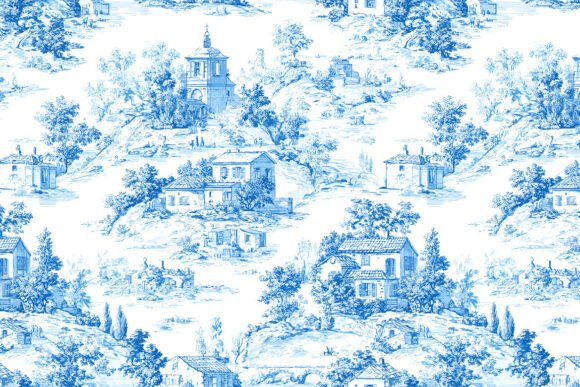
Historically, Toile de Jouy originated in the French town of Jouy-en-Josas during the mid-1700s. Traditionally, these prints depicted pastoral scenes, mythology, or intricate floral arrangements in a single color against a cream or white background. While the core identity of the style remains rooted in tradition, its application has evolved significantly. Today's creators do not just want static images; they require flexible, high-resolution assets that can adapt to various mediums without losing fidelity.
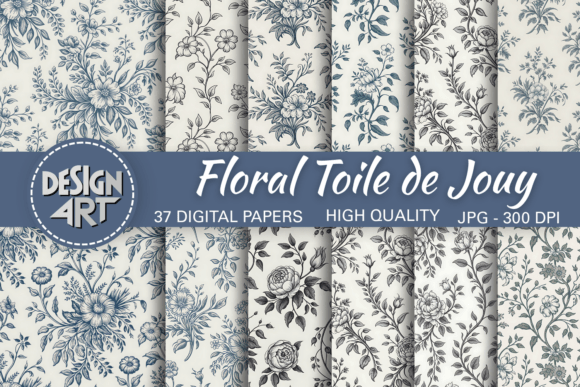
This evolution reflects broader changes in the creative industry. The barrier to entry for launching a product line—be it wallpaper, fabric, or stationery—has lowered, but the bar for quality has risen. A professional designer cannot rely on low-resolution scans or poorly tiled repeats. The modern workflow demands files that are ready for large-scale printing yet editable enough to fit specific brand guidelines. This is where a comprehensive collection, such as one featuring 37 high-resolution seamless patterns, becomes an indispensable tool. It allows users to bypass the time-consuming process of sourcing individual elements and manually constructing repeats, providing instead a library of professionally engineered tiles.
Furthermore, the versatility of these patterns aligns with the current trend of "maximalist minimalism." Consumers are looking for spaces and products that feel curated and personal rather than sterile. The intricate linework and balanced compositions found in botanical toile designs offer a way to add visual interest without overwhelming the senses. They provide a structured chaos that feels both organic and deliberate, fitting beautifully into interiors that blend modern furniture with vintage accents.
Practical Applications Across Industries
The utility of a Floral Toile De Jouy Seamless Pattern extends far beyond simple decoration. For professionals in the textile and interior design sectors, these patterns serve as the foundation for tangible products. Imagine a boutique hotel looking to refresh its guest rooms with wallpaper that exudes old-world charm, or a fashion brand launching a spring collection inspired by English and French gardens. The availability of tileable, high-resolution JPEGs (such as those sized at 3072 × 3072 px) ensures that the final print output remains crisp, whether it is covering a small gift box or an entire wall.
For the burgeoning community of print-on-demand entrepreneurs, these assets are particularly valuable. The business model relies on speed and variety. Being able to quickly recolor, rotate, or layer a classic toile pattern allows a seller to test multiple variations of a product—perhaps a navy blue toile on a tote bag versus a sage green version on a pillowcase—without needing to commission custom illustrations for each iteration. The seamless nature of the files means there are no awkward breaks or visible seams in the final product, a critical factor in maintaining professional credibility.
Educators and hobbyists also find immense value in these collections. In scrapbooking and paper crafts, the narrative quality of toile illustrations adds a storytelling element to memory keeping. The delicate floral arrangements and garden motifs evoke a sense of nostalgia that resonates deeply in personal projects. Moreover, because the files are fully editable, users can isolate specific botanical elements to create custom stickers, invitations, or digital planners, extending the life of the original pattern into new creative avenues.
Navigating the Technical Requirements of Professional Print
One of the most significant challenges in digital design is ensuring that a pattern looks as good in physical form as it does on a screen. Many free or low-cost resources fail at this hurdle, offering files that pixelate when scaled or repeat incorrectly, creating distracting lines across the fabric or paper. A professional-grade collection mitigates these risks by prioritizing technical precision.
When selecting patterns for commercial use, several technical factors must be considered:
- Resolution and Scale: High-resolution files are non-negotiable for print. A size of 3072 × 3072 pixels provides sufficient data density for most standard printing processes, ensuring that the fine linework characteristic of Toile de Jouy remains sharp and defined.
- Seamless Tiling: The engineering of the repeat is crucial. A true seamless pattern allows for infinite tiling in any direction. This is essential for large-scale applications like upholstery or wallpaper, where the pattern must flow continuously without interruption.
- File Format Flexibility: While JPEG is a standard for high-quality image storage, the ability to edit the source file is key. Professionals often need to adjust colors to match specific Pantone codes or brand palettes. Having a clean, layered structure facilitates this customization.
The inclusion of 37 distinct patterns in a single collection offers a strategic advantage. It provides a cohesive visual library where different motifs complement one another. A designer might use a dense floral toile for a feature wall and a lighter, more spaced-out botanical pattern for coordinating curtains or bedding. This internal consistency simplifies the design process and ensures a harmonious final result.
Meeting the Demand for Authenticity and Sustainability
Current market preferences indicate a strong shift towards sustainability and longevity in design. Fast fashion and disposable decor are facing scrutiny, with consumers increasingly investing in items that will endure both physically and stylistically. The Floral Toile De Jouy Seamless Pattern embodies this philosophy. Unlike trendy graphics that may feel dated within a year, the classic French aesthetic has proven its staying power over centuries.
By incorporating these timeless designs into products, businesses can appeal to a demographic that values heritage and quality. This approach supports a "buy less, buy better" mentality. For instance, a linen dress printed with a refined toile pattern is perceived as a wardrobe staple rather than a fleeting trend. Similarly, wallpaper featuring these motifs is viewed as an investment in the home's character, likely to remain appealing even as interior design trends shift.
Moreover, the digital nature of these patterns supports sustainable practices in the design phase. By utilizing digital mockups and precise tileable files, designers can minimize waste during the prototyping stage. They can visualize exactly how a pattern will look on a garment or a room before a single yard of fabric is printed or a drop of ink is used.
Strategic Implementation for Brand Growth
For marketers and business owners, the choice of visual assets is a direct reflection of brand identity. Utilizing a Floral Toile De Jouy Seamless Pattern signals sophistication and attention to detail. It suggests that the brand respects tradition while embracing modern functionality. This duality is powerful in building trust with an audience that is often skeptical of overly polished or artificial marketing.
Consider the application in digital marketing materials. Email newsletters, social media backgrounds, and website headers adorned with subtle toile textures can elevate the perceived value of the content. It creates a tactile feeling in a digital space, engaging the user on a sensory level. When these digital touchpoints are consistent with physical products—such as packaging wrapped in matching toile paper—the brand experience becomes cohesive and memorable.
However, successful implementation requires restraint. The intricacy of toile designs means they work best when given room to breathe. Overcrowding a layout with too many competing patterns can dilute the impact. The recommendation is to use these patterns as a primary hero element or a sophisticated background, pairing them with clean typography and ample white space. This balance ensures that the graceful florals and refined vintage charm enhance the message rather than distract from it.
In conclusion, the integration of classic French elegance into modern design projects is more than an aesthetic choice; it is a strategic decision rooted in an understanding of history, quality, and consumer psychology. The availability of high-quality, versatile, and seamless pattern collections empowers creators to bring this vision to life efficiently. Whether for a large-scale manufacturing run or a bespoke craft project, the Floral Toile De Jouy Seamless Pattern remains a vital resource for anyone looking to add depth, story, and enduring beauty to their work.