Mastering the Patriotic American Coquette Bows Pattern for Professional Craft Results
The aesthetic of soft femininity meeting bold national pride has taken the crafting world by storm, and nothing captures this duality quite like the Patriotic American Coquette Bows Pattern. This design trend blends the delicate, ribbon-tied elegance of coquette style with the iconic red, white, and blue motifs of American heritage. Whether you are a small business owner creating custom tumbler wraps, an educator designing classroom materials, or a hobbyist assembling a junk journal, these patterns offer a versatile foundation for creativity. However, diving into digital paper collections without a clear understanding of file specifications and usage rights can lead to frustrating results. Many creators rush to download free or low-cost assets, only to find their final prints pixelated or their commercial projects halted by licensing restrictions. To ensure your projects look professional and function exactly as intended, it is essential to approach these digital assets with a discerning eye.
Understanding the Versatility of Seamless Designs
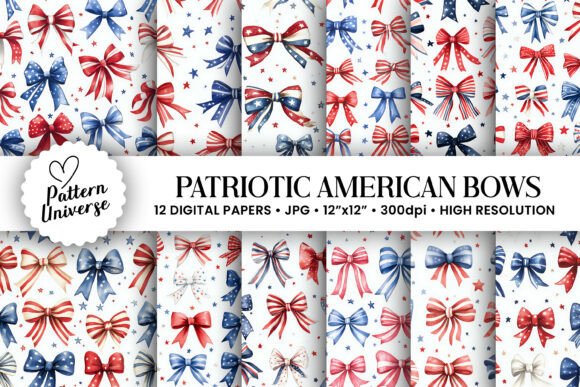
At its core, a seamless pattern is an image that tiles perfectly without visible edges, allowing you to cover any surface area continuously. The Patriotic American Coquette Bows Pattern specifically leverages this technology to provide endless backgrounds for greeting cards, invitations, and wall art. When you utilize a high-quality set, such as a collection featuring 12 unique digital papers, you gain the flexibility to mix and match styles while maintaining a cohesive theme. These designs often feature hand-drawn bows, stars, and stripes rendered in watercolor or vector styles, offering a softer alternative to rigid geometric flags.
The appeal lies in the application. For entrepreneurs selling on platforms like Etsy, these patterns serve as the backbone for sublimation projects. A tumbler wrap requires a specific width-to-height ratio and crisp lines to avoid blurring when heated. Similarly, scrapbookers need textures that do not overpower photos or journaling cards. The mistake many beginners make is assuming all "digital papers" are created equal. A pattern designed for web use at 72 DPI will look muddy and unprofessional when printed on cardstock. Always verify that your source provides files at 300 DPI, which is the industry standard for high-quality printing.
Common Pitfalls in Selecting Digital Assets
One of the most frequent errors creators make is overlooking file dimensions relative to their intended project size. You might find a beautiful Patriotic American Coquette Bows Pattern online, but if the file size is only 1000 x 1000 pixels, it simply cannot be scaled up to cover a 12x12 inch scrapbook page without losing clarity. When pixels are stretched beyond their native resolution, the image becomes blocky, ruining the delicate details of the bows and ribbons. Before downloading or purchasing, always check the technical specifications. A robust collection should offer files sized at least 3600 x 3600 pixels, ensuring you have enough data to print at 12 inches by 12 inches with sharp, crisp lines.
Another significant misunderstanding involves file formats and layering. Some users expect digital paper packs to come with editable layers, allowing them to move individual bows or change colors instantly. While some advanced bundles offer this, most seamless patterns are delivered as flattened JPEG or PNG files within a zip archive. If you attempt to edit a flattened image extensively in basic software, you may introduce artifacts or halos around the design elements. Instead of fighting the file format, embrace the seamless nature of the design. Use the pattern as a background and layer solid elements or text on top using your design software. This approach preserves the integrity of the original artwork and ensures a cleaner final product.
Navigating Licensing and Commercial Use
For freelancers and small business owners, the stakes are higher than just aesthetics; they involve legal compliance. A common and costly mistake is assuming that because a pattern was purchased or downloaded for free, it can be used for unlimited commercial purposes. Many designers offer personal-use licenses for free downloads, reserving commercial rights for paid tiers. Using a Patriotic American Coquette Bows Pattern intended for personal junk journaling on a line of greeting cards you intend to sell can lead to copyright strikes or account suspensions on marketplaces.
To avoid this, always read the "Terms of Use" included in the zip file. Look for specific language regarding "small business commercial use" or "print-on-demand" restrictions. Reputable creators will clearly outline whether you can sell physical items made with the pattern (like wrapped gifts or finished cards) versus selling the digital file itself (which is almost always prohibited). If the documentation is vague, reach out to the creator before investing time into a product line. It is far better to clarify usage rights upfront than to rebrand an entire inventory later due to a violation.
Optimizing Your Workflow for Best Results
Once you have secured a high-resolution, properly licensed collection, the next step is efficient integration into your workflow. Do not leave your digital papers scattered across various download folders. Organize your 12 digital papers into a dedicated library, perhaps categorizing them by color dominance or motif density. This simple organizational habit saves hours when you are under a deadline to produce invitations or party decorations.
When applying these patterns to physical crafts, consider the material you are printing on. A pattern heavy with red ink may require a different printer setting than one dominated by white space to prevent smudging. For tumbler wraps, ensure you mirror the image if your sublimation process requires it, and always run a test print on standard paper to check color accuracy before committing to expensive sublimation blanks. Colors on screens often appear more vibrant than they do in print; a slight adjustment in saturation or contrast can make the difference between a dull flag and a vibrant patriotic display.
Furthermore, do not limit the Patriotic American Coquette Bows Pattern to traditional uses. While gift wrapping and scrapbooking are obvious choices, consider using these backgrounds for digital marketing assets. Bloggers can use them as subtle backgrounds for Pinterest pins during the Fourth of July season, and educators can incorporate them into worksheets or certificate templates. The key is to maintain legibility; if the pattern is busy, reduce its opacity or place a solid text box over it to ensure your message remains clear.
Making the Right Choice for Your Projects
Ultimately, the quality of your craft reflects the quality of the resources you choose. Settling for low-resolution images or ignoring licensing terms undermines the professionalism of your work. By prioritizing high-DPI files, understanding the limitations of flattened images, and respecting intellectual property, you elevate your output from amateur to artisan. The Patriotic American Coquette Bows Pattern offers a charming way to celebrate American spirit with a touch of grace, but only if handled with care and knowledge.
Before you begin your next project, take a moment to evaluate your digital toolkit. Ensure your files are ready for the scale you need, your permissions are in order, and your design software is set up for optimal color management. With the right preparation, these seamless patterns become more than just backgrounds; they become the foundation for memorable, high-quality creations that resonate with your audience. Whether you are wrapping a gift for a neighbor or launching a new product line, attention to these details ensures your patriotic coquette designs stand out for all the right reasons.