Evaluating Pastel Composition Notebook Seamless Patterns for Modern Design Projects
The aesthetic of the classic composition notebook is a staple in design, evoking feelings of nostalgia, organization, and academic creativity. Traditionally defined by its black-and-white marble cover, this iconic look has evolved to meet contemporary tastes through the introduction of Pastel Composition Notebook Seamless Patterns. These digital resources offer a sophisticated twist on a familiar texture, replacing high-contrast monochrome with soft, muted hues while retaining the distinctive speckled and marbled details that make the original so recognizable. For designers, crafters, and content creators, understanding the specific utility of these pastel variations compared to traditional options is essential for selecting the right assets for a project.
A Pastel Composition Notebook Seamless Pattern is essentially a tileable digital image designed to repeat infinitely without visible seams. The "pastel" designation refers to the color palette, which typically includes shades like blush pink, mint green, lavender, baby blue, and soft peach. Unlike standard stock photos or single-image backgrounds, seamless patterns are engineered specifically for surface design applications where continuity is required. The value proposition here lies in the versatility of the format; whether you are designing a fabric print that needs to flow across yards of material or a digital background for a website that must adapt to various screen sizes, the seamless nature of the file ensures a professional finish.
Distinguishing Features and Format Considerations
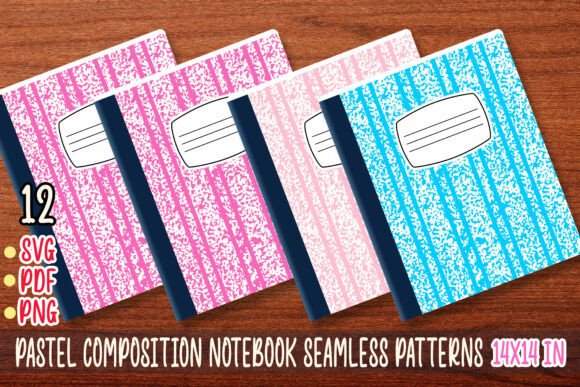
When evaluating a bundle such as the 12-pattern collection often found in this category, several technical specifications determine its practical application. The inclusion of multiple file formats—specifically SVG, PNG, and PDF—caters to a wide range of workflows. The PNG format, typically provided at 300 DPI, is the industry standard for high-resolution printing. This resolution is critical for physical products like wrapping paper, journals, or sublimation transfers, where pixelation can ruin the final output. A 14x14 inch base size offers a generous canvas, allowing designers to scale the pattern up or down without losing clarity.
Conversely, the SVG (Scalable Vector Graphics) format represents a different approach to digital design. While the PNG is raster-based (made of pixels), SVG is vector-based, meaning it uses mathematical paths to define shapes. This makes SVG files infinitely scalable without any loss of quality, ideal for large-format printing or situations where the design needs to be edited within vector software like Adobe Illustrator or Inkscape. The presence of both formats in a single package provides a significant advantage over resources that offer only one type, giving the user flexibility depending on their specific software ecosystem and end-use requirements.
The visual distinction of these pastel patterns also sets them apart from other textured backgrounds. While some alternatives rely on flat colors or generic geometric repeats, the composition notebook style incorporates organic elements like vertical stripe details and irregular speckling. This adds depth and tactile realism to digital projects, mimicking the feel of physical paper. The pastel variation softens this texture, making it less aggressive than the traditional black-and-white version, which can sometimes dominate a layout or clash with colorful foreground elements.
Comparative Analysis: Pastel vs. Traditional and Other Textures
Choosing between a Pastel Composition Notebook Seamless Pattern and its alternatives often comes down to the intended mood and audience of the project. The traditional black-and-white marble pattern is bold and high-contrast. It works exceptionally well for masculine designs, retro-themed projects, or situations where a strong graphic statement is needed. However, its intensity can make it difficult to layer text or other graphics on top without reducing readability. In these scenarios, the pastel alternative serves as a superior choice. The reduced contrast allows the texture to act as a subtle backdrop rather than the focal point, facilitating better legibility for overlays such as planner stickers, journal headers, or website typography.
Furthermore, when compared to other popular seamless patterns like florals, polka dots, or abstract watercolors, the composition notebook style offers a unique structural balance. Floral patterns can sometimes feel too busy or seasonal, while geometric shapes may appear too rigid or corporate. The marbled texture of the composition notebook strikes a middle ground; it is organic enough to feel warm and inviting but structured enough to maintain a sense of order. This makes it particularly effective for educational materials, productivity tools, and lifestyle branding where a balance of creativity and discipline is desired.
It is also worth noting the difference between seamless patterns and static background images. A static image is fixed in dimension; if you try to stretch it to fit a larger area, it distorts or leaves empty space. A seamless pattern, by definition, solves this problem. For users creating print-on-demand products like phone cases or tote bags, where dimensions vary wildly between manufacturers, the seamless nature of these files is not just a convenience—it is a necessity. Attempting to use a non-seamless image for these applications often results in awkward cropping or visible edges that detract from the professional quality of the product.
Practical Applications and Best-Fit Scenarios
The utility of these patterns extends across a diverse array of industries and hobbyist pursuits. In the realm of scrapbooking and digital planning, these assets are invaluable. Digital planners, which have surged in popularity among productivity enthusiasts, rely heavily on layered PDFs. A pastel composition background provides a cohesive theme for monthly spreads or daily logs without overwhelming the writing space. Similarly, for physical scrapbookers, printing these patterns on cardstock creates custom paper that coordinates perfectly with pastel-themed embellishments.
In the context of sublimation and print-on-demand, the high-resolution PNGs included in these bundles are ready for immediate production. Sublimation printing requires images to be mirrored and printed at high density to ensure vibrant color transfer onto polyester fabrics or coated mugs. The 300 DPI specification ensures that the fine speckled details of the marble texture remain crisp even after the heat press process. This makes the patterns suitable for creating cohesive product lines, such as matching notebooks, mousepads, and apparel.
Fabric design is another area where these seamless patterns excel. When sending a design to a fabric printer, the file must tile perfectly to avoid visible breaks in the pattern across the yardage. The seamless repeat design inherent in these files simplifies this process. The soft pastel palette is particularly trending in children's apparel, nursery decor, and boutique stationery, offering a gender-neutral or soft-aesthetic option that appeals to a broad demographic.
Limitations and Decision Factors
While versatile, the Pastel Composition Notebook Seamless Pattern is not a universal solution for every design challenge. One limitation to consider is color specificity. Most bundles come with a pre-determined set of pastel shades. If a brand requires a very specific Pantone match or a neon colorway, these pre-made patterns may require additional editing in graphic design software to recolor the elements. While the SVG format facilitates this editing, it does require a level of technical proficiency that some casual users may lack. Users seeking a "drag-and-drop" solution with exact custom colors might find themselves needing to invest time in customization or seek a bespoke design service.
Additionally, the aesthetic itself carries connotations. The composition notebook look is inherently tied to themes of school, writing, and nostalgia. While the pastel update modernizes it, the underlying structure still suggests an academic or organizational context. For projects aiming for a ultra-modern, minimalist, or luxury high-fashion vibe, this texture might feel too playful or informal. In such cases, a solid color gradient or a more abstract, fluid marble pattern might be a more appropriate alternative.
Another factor is the complexity of the pattern relative to the content placed over it. Although pastel versions are softer than their black-and-white counterparts, they still possess a fair amount of visual noise due to the speckling. When overlaying small text or intricate icons, designers must ensure there is sufficient contrast. Sometimes, adding a semi-transparent white overlay or a blur effect to the pattern is necessary to create a safe reading area. This extra step is a minor trade-off for the aesthetic benefit but is something to anticipate during the design process.
Making the Right Choice for Your Project
Ultimately, deciding whether to utilize a Pastel Composition Notebook Seamless Pattern depends on the intersection of your project's functional needs and its emotional tone. If you are developing a brand identity for a stationery shop, a line of educational apps, or a lifestyle blog focused on organization and self-care, these patterns offer a highly relevant and visually appealing foundation. The combination of the timeless marble texture with a modern pastel palette bridges the gap between classic reliability and contemporary softness.
For those comparing resources, the key differentiators to look for are file variety and resolution. A robust package that includes SVG, PNG, and PDF formats provides the longevity and flexibility needed for both digital and physical applications. The ability to switch between a raster image for quick mockups and a vector file for precise scaling is a hallmark of a high-quality asset. Furthermore, ensuring the patterns are truly seamless and high-resolution prevents technical headaches down the line, especially for commercial printing.
In conclusion, these patterns represent a strategic design choice for creators looking to inject a sense of organized creativity into their work. They are not merely decorative backgrounds but functional tools that solve specific tiling and resolution challenges while establishing a distinct visual voice. By weighing the benefits of the soft aesthetic against the potential need for color customization and understanding the technical advantages of the provided file formats, designers can effectively leverage these resources to elevate their projects from standard to standout. Whether for a simple DIY journal cover or a complex commercial fabric line, the pastel composition notebook style remains a versatile and enduring option in the designer's toolkit.