Evaluating Gummy Candy Digital Paper for Creative Projects
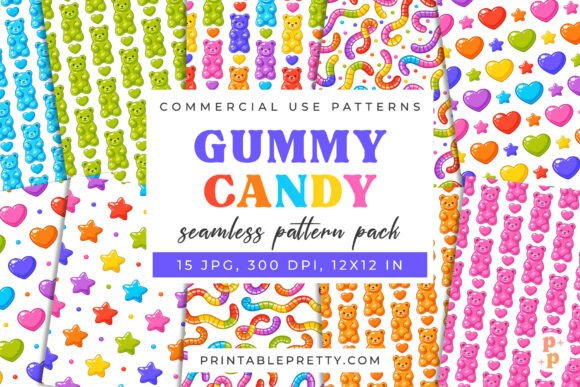
Digital design resources come in countless styles, ranging from minimalist textures to complex illustrations. Among these, Gummy Candy Digital Paper has emerged as a distinct category for creators seeking playful, vibrant aesthetics. This specific type of digital asset typically features seamless patterns inspired by confectionery, utilizing bright colors and whimsical shapes like gummy bears, worms, stars, and hearts. For designers, crafters, and hobbyists, understanding the utility and limitations of this niche resource is essential before integrating it into a workflow.
The core appeal of this pack lies in its ability to instantly establish a fun, youthful, or celebratory tone. A standard collection often includes 15 high-quality seamless JPEG files, each sized at 12 x 12 inches with a resolution of 3600 x 3600 pixels at 300 DPI. These technical specifications are critical because they determine where and how the images can be used effectively. The flat graphic style and bright candy motifs offer a clean look that avoids visual clutter, making them versatile for various applications despite their specific theme.
Understanding the Aesthetic and Technical Value
When evaluating Gummy Candy Digital Paper, one must look beyond the immediate visual charm to understand its functional design. The "seamless" nature of these patterns means they can be tiled indefinitely without visible breaks or edges. This is particularly valuable for background creation in web design, scrapbooking layouts, or wrapping paper designs where continuity is required. The 300 DPI resolution ensures that the images remain crisp when printed, supporting professional-grade output for physical products like invitations, stickers, or party decorations.
The color palette is another defining characteristic. Typically relying on a rainbow spectrum, these designs use saturation to evoke energy and joy. However, the flat graphic style prevents the images from appearing too busy or overwhelming. This balance allows the patterns to serve as a backdrop without obscuring foreground elements such as text or focal photographs. For users comparing different digital paper packs, the consistency of the 12x12 inch format is a significant advantage, as it aligns with standard industry sizes for digital scrapbooking and printable crafts.
Ideal Use Cases and Strategic Fit
Determining whether this resource aligns with your goals depends largely on the intended audience and the project's mood. Gummy Candy Digital Paper is an exceptional fit for projects targeting children, celebrations, or lighthearted themes. Specific scenarios where these patterns excel include:
- Birthday Invitations and Party Decor: The vibrant motifs naturally complement birthday themes, especially for younger demographics.
- Educational Materials: Teachers and content creators can use these backgrounds to make worksheets, reward charts, or presentation slides more engaging for students.
- Digital Scrapbooking: The 12x12 inch format is the industry standard for digital pages, allowing for easy layering with photos and embellishments.
- Social Media Graphics: The bright colors stand out in feeds, making them suitable for posts related to sweets, summer activities, or fun announcements.
- Packaging Design for Small Businesses: Artisans selling handmade soaps, candies, or toys might use these patterns for labels or box liners to reinforce a playful brand identity.
In these contexts, the pre-made nature of the patterns saves considerable time. Instead of illustrating individual gummy bears or constructing a vector pattern from scratch, a user can import the JPEG and immediately begin arranging their layout. This efficiency is a primary benefit for freelancers working under tight deadlines or hobbyists who may not possess advanced illustration skills.
Considerations and Potential Tradeoffs
While the benefits are clear, there are tradeoffs to consider when selecting Gummy Candy Digital Paper. The most obvious limitation is thematic specificity. Because the imagery is explicitly tied to candy and sweets, it lacks the neutrality of geometric or textured papers. Using these patterns for corporate reports, formal wedding invitations, or somber topics would create a tonal mismatch that could undermine the message.
Furthermore, the flat graphic style, while clean, may not suit projects requiring depth or realism. If a design calls for photorealistic textures or hand-painted watercolor effects, these digital papers might appear too digital or rigid. Users should also consider color management. The vibrant rainbow palette is designed to pop on screens, but colors can shift during printing depending on the printer profile and paper stock. It is advisable to run test prints to ensure the bright hues do not become muddy or oversaturated in physical form.
Another consideration is file format. These packs usually come as JPEGs. While JPEGs are universally compatible and offer good compression, they are raster images. Unlike vector files (SVG or EPS), they cannot be scaled up infinitely without potential pixelation, although the provided 3600x3600 pixel resolution mitigates this for most standard print sizes. Additionally, editing colors within a flattened JPEG is more difficult than adjusting a vector file, limiting customization options if a specific brand color match is required.
Comparing Alternatives
For those weighing their options, it is helpful to compare Gummy Candy Digital Paper against alternative resources. If the goal is maximum flexibility, purchasing vector clip art sets might be preferable. Vectors allow for infinite scaling and easy color changes, though they require more assembly time to create a full background pattern. Conversely, if the need is for a subtle background, solid color textures or noise gradients might be more appropriate, as they do not compete with foreground content.
However, for users who need a ready-to-use, cohesive set of patterns that convey a specific emotion instantly, this type of digital paper remains a strong contender. The value proposition lies in the curation; a pack of 15 coordinated designs ensures visual consistency across a multi-page document or a series of social media posts, something that can be time-consuming to achieve by mixing and matching disparate assets.
Making the Final Decision
Selecting the right digital assets ultimately comes down to aligning the resource with the project's objectives. If the priority is speed, thematic consistency, and a cheerful aesthetic, investing in a high-resolution Gummy Candy Digital Paper pack is a logical choice. The technical specs of 300 DPI and 12x12 inches provide a solid foundation for both digital and print media.
Conversely, if the project demands strict brand color adherence, photorealism, or formal tones, alternative textures or custom illustrations may yield better results. By evaluating the specific needs of the audience and the constraints of the medium, creators can determine whether these vibrant, candy-inspired patterns will enhance their work or distract from it. When used in the right context, they offer a powerful tool for injecting joy and creativity into visual communications.